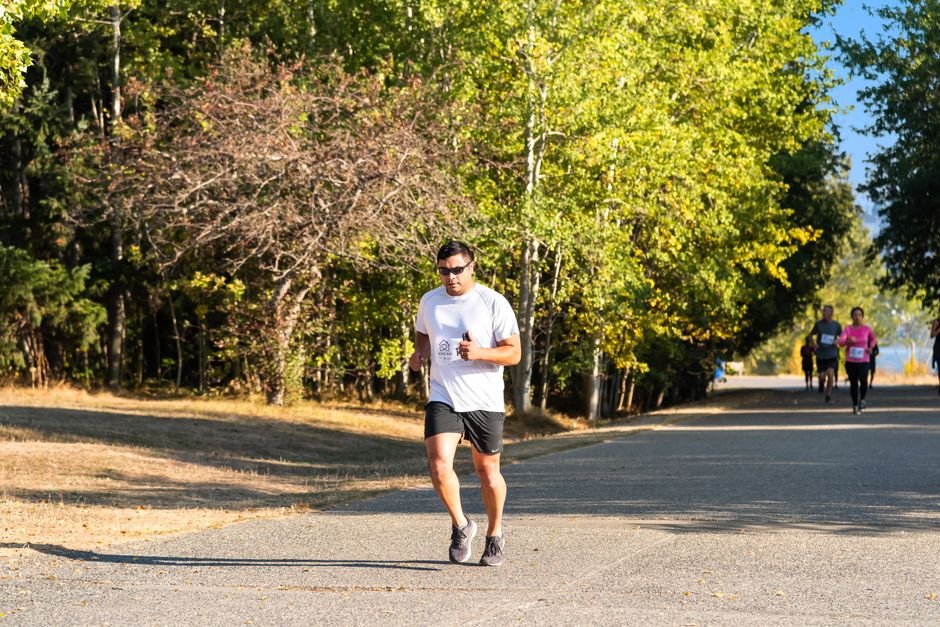
A woman power walking with a stroller passed me on a run during my first year, not jogging, just walking briskly, and I remember the specific heat of embarrassment that went through me watching her pull ahead. I was, by any honest measure, running slowly that whole first year, slower than I expected, slower than felt like it should count as running at all some days. I spent a lot of that year quietly mortified about it. Looking back now, I think that embarrassment was one of the more pointless things I carried around during a year that otherwise had plenty to be proud of.
What I imagined running would feel like
Before I started, I had some vague picture in my head of what running looked like, informed mostly by watching other people do it from a distance, people who’d clearly been at it for years. I assumed that once I started running myself, I’d more or less look like that fairly quickly, moving at a pace that looked effortless and covered ground fast. What actually happened was that I ran, by comparison, slowly, and the gap between the picture in my head and what my body was actually doing felt like proof I was somehow doing it wrong.
The year of comparing myself to everyone
I spent an unreasonable amount of energy that first year comparing my pace to other people I saw out running, to people at a local race I signed up for, even to strangers jogging past me going the other direction. None of that comparison did me any good. It didn’t make me faster. It just made runs that were already physically hard also mentally exhausting, because I was running the actual route and also running an imaginary race against people who had no idea I existed.
Where the shame actually came from
I don’t think the shame came from running itself. I think it came from treating pace as a stand in for worth, as if being slow said something true and unflattering about me as a person rather than just being an accurate description of where my body was after a few months of doing something entirely new. I wouldn’t have expected to play a piano well in my first year of lessons. I don’t know why I expected my legs to move quickly after a few months of using them in a completely new way.
What actually happened to my pace
My pace did change over the following years, though not in a straight line, and there were long stretches, including a full year I didn’t run at all because of an injury, where it went backward rather than forward. But I can say honestly that the pace itself was never really the thing that mattered. What mattered was whether I kept showing up, and the shame I carried about being slow in that first year did nothing to help with that. If anything, it made a few of those early runs feel worse than they needed to.
What I’d say to that version of me
If I could talk to the woman who felt her face go hot watching a stranger with a stroller pull ahead of her, I don’t think I’d tell her to ignore how she felt, because I don’t think that kind of feeling responds well to being told to just get over it. I’d probably just tell her that the pace she’s running right now is not a verdict on anything, it’s just where she happens to be standing on a road she’s only just started walking down. Nine years later, having gone slower than that in stretches, and having also felt genuinely proud of long runs that had nothing to do with speed, I believe that more than I believed it then.
Why I’m glad I kept going anyway
What I actually value about that first year, looking back, has almost nothing to do with pace. It’s that I kept lacing up my shoes despite feeling embarrassed most of the time, which in hindsight took more out of me than the running itself did. I’m not particularly fast now either, by most measures, and I’ve stopped treating that as information worth being ashamed of. That first slow year turned out to be the necessary starting point for everything that came after, including plenty of stretches that were slower still, and I don’t think any of it would have gone better if I’d been less embarrassed about the number on a watch I barely understood how to read.
What I noticed when I finally stopped comparing
The shift away from comparing my pace to strangers didn’t happen all at once. It happened gradually, mostly because I got tired of the specific exhaustion that came from running an actual route and an imaginary competition at the same time. Once I stopped doing that, I noticed things about my own running I’d been too distracted to pay attention to before, how my breathing settled after the first mile, how certain routes felt better on certain days for reasons that had nothing to do with speed. None of that was available to me while I was busy measuring myself against people who had no idea I existed.
Why the shame took so long to fade
I’ve wondered since why it took as long as it did to let go of that first year embarrassment, and I think part of it was that nobody around me was talking honestly about how slow their own starting pace had been. Everyone I saw out running looked, from a distance, like they’d always been capable of what they were doing in front of me. It took years of running alongside clubmates who eventually admitted their own rough starts before I understood that the gap I felt so ashamed of was closer to universal than personal.