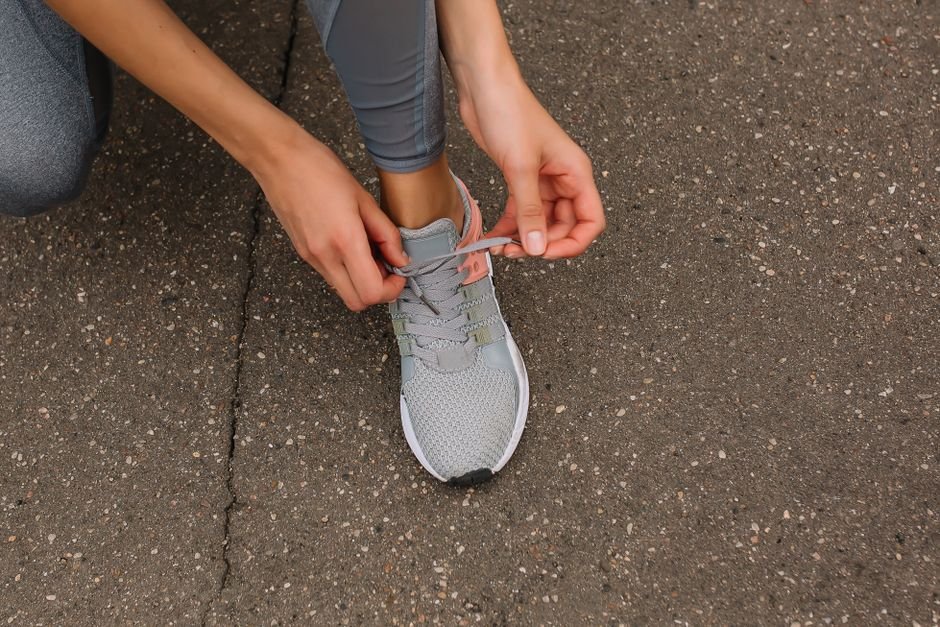
I still remember the blister that ended one of my early runs, a deep, ugly thing on the side of my foot that took almost two weeks to fully heal. At the time I had no idea it had anything to do with the shoes I was wearing. I just assumed my feet weren’t used to exercise yet and this was part of the process. Looking back now, nine years in, it’s obvious that a lot of what I struggled with that first year had less to do with my body and more to do with gear I chose without knowing what I was choosing.
The shoes I started in
I ran my entire first several months in a pair of shoes I already owned, an old pair I’d bought years earlier for no particular athletic purpose, more because they were comfortable to wear around than because they were built for running. It never occurred to me that shoes could be wrong for running the way a screwdriver can be wrong for hammering a nail. I figured a shoe was a shoe. It took blisters, some genuinely uncomfortable soreness in my feet after longer efforts, and eventually a passing comment from someone at a local running shop before I understood that the shoes mattered at all.
What I got wrong picking new ones
Once I accepted I needed different shoes, I made a different mistake, choosing a pair mostly because I liked how they looked rather than because anyone had actually watched me run or thought about what I needed. I remember feeling a little proud walking out of the store with them, like I’d leveled up as a runner just by owning proper looking running shoes. They were fine, not disastrous, but they weren’t particularly right for me either, and I ran in them for months without questioning whether they were actually serving me well or whether I’d just liked how they looked on the shelf.
Clothes chosen for the wrong reasons
Shoes weren’t the only place I got it wrong. I ran my first summer in cotton shirts because that’s what was in my closet, and I distinctly remember a long, humid run where the shirt got so heavy with sweat that I could feel the extra weight of it dragging on me by the end. I didn’t understand that fabric choice made any real difference until that run made it impossible to ignore. I also bought a couple of running specific pieces early on purely because they looked like what I imagined a “real runner” wore, without any sense of whether they actually fit how or where I was running.
The mistake underneath all the mistakes
Looking back, I think the actual mistake wasn’t any single piece of gear. It was that I treated gear as either irrelevant or as a kind of costume, something to either ignore entirely or use to signal that I was serious about this new hobby, rather than something to actually think through based on what my runs were like. I didn’t ask questions. I didn’t try things on with any real attention. I just grabbed whatever was closest or whatever looked the part, and then wondered why parts of running felt more uncomfortable than they needed to.
What it cost me that year
None of this stopped me from running that first year, but it made a hard first year harder than it had to be. Blisters, chafing, a general sense that my body wasn’t well suited to running when really it was my gear that wasn’t well suited to what I was doing with it. I remember several early runs I cut short specifically because something was rubbing wrong or a shirt was bothering me, runs that had nothing to do with fitness and everything to do with equipment I hadn’t thought carefully about.
What I’d tell that version of myself
I’m not going to turn this into a list of recommendations, because what worked out for me eventually was specific to my feet, my build, the kind of running I ended up doing, and none of that necessarily applies to anyone else. What I will say is that I wish I’d understood sooner that discomfort wasn’t just part of paying my dues as a beginner. Some of it was gear that simply wasn’t right for me, and figuring that out sooner would have made that first year feel less like an uphill fight against my own body and more like what it actually was, a body doing something new with the wrong equipment.
The mistake I kept making even after I knew better
What surprises me looking back is that figuring out the shoe and clothing issues didn’t stop me from making a related mistake for years afterward, which was holding onto gear long past the point it was still doing its job. I got attached to things once I finally found what worked, and attachment made me slow to notice when a pair of shoes had quietly stopped feeling right underfoot, or when a piece of clothing had thinned out enough that it wasn’t functioning the way it used to. I’d keep running in worn out gear out of a kind of loyalty that had nothing to do with whether it was still serving me.
What I’d tell someone just starting out
If a newer runner asked me directly what to do about gear, I’d probably resist giving a list, because so much of what worked for me was specific to my own feet and my own runs. What I would say is that discomfort you can’t explain is worth paying attention to rather than assuming it’s just part of getting started. I didn’t understand that distinction in my first year. I assumed everything uncomfortable was a normal cost of being new at this, when some of it was actually gear working against me the whole time.