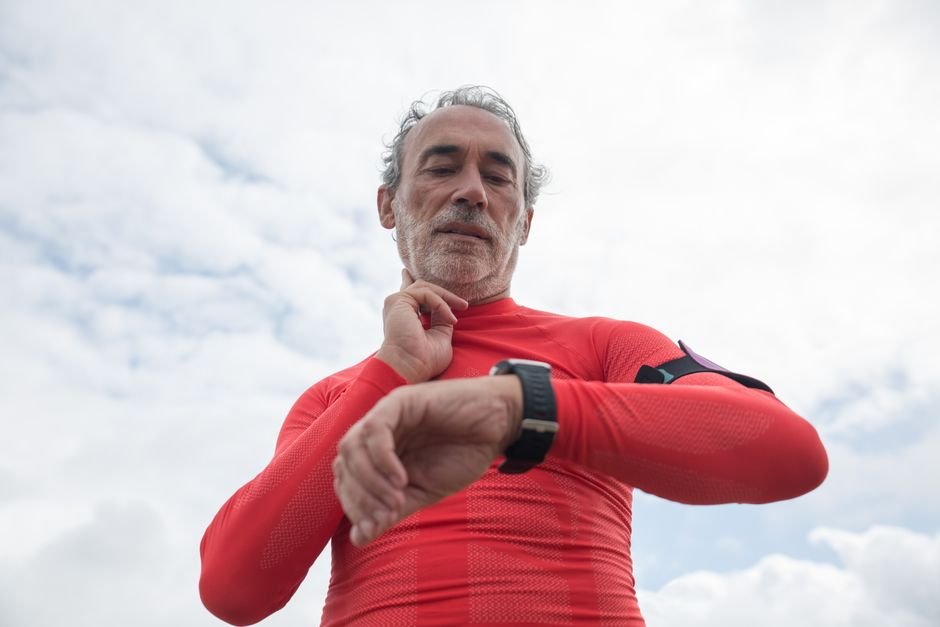
About a year and a half ago I decided to stop looking at my pace during runs and just go by feel for a while, and I want to be upfront that this did not turn into some clean success story where I discovered a better way to run and never looked back. It was messier than that, and in a couple of specific instances it actually got me into trouble.
Why I Tried It in the First Place
I got the idea after noticing how much of my mental energy during a run was going toward checking numbers instead of paying attention to how my body actually felt. I would glance down constantly, recalculating, adjusting, and it started to feel like I was managing a spreadsheet instead of just running. So I decided to cover the screen for a stretch of runs and rely entirely on how things felt in the moment. I also liked the idea of it, if I am honest, more than I had fully thought through the reality of it. There was something appealing about the image of running purely on instinct, the way I imagined runners did before any of this technology existed, and I did not examine that image very closely before deciding to try it.
The Runs Where It Worked
For the first few weeks, it genuinely felt freeing. I paid more attention to my breathing, to how my legs felt on hills, to the general rhythm of a run without constantly measuring it against a number. On a handful of easy runs, this was exactly what I wanted, less noise in my head, more actual attention on the run itself. For those few weeks I told anyone who would listen how much better this felt, which in hindsight was a little premature. I had only tested it on the kind of runs that were forgiving to begin with, shorter, familiar routes where getting the effort slightly wrong was not going to cost me much.
The Runs Where It Did Not Work
But then it started causing real problems. On one long run with the club, I felt strong early and had no way to check whether I was running faster than I meant to, and by the time I noticed I was struggling, I was already in trouble, well past the point where slowing down could fully fix it. I finished that run in a rough state and had to sit on the curb for a while before I felt steady enough to walk home. On another occasion, the opposite happened, I felt sluggish and assumed I was working hard, only to find out later, when a clubmate mentioned it, that I had been running noticeably slower than the pace the group was holding without realizing it at all. My sense of feel was simply not as reliable as I wanted it to be. Both of those runs happened within the same month, which is part of why I could not just write either one off as a fluke. I had gone into this expecting my body to be a more trustworthy narrator than a screen, and instead I had two separate examples of it telling me the wrong story entirely.
What I Got Wrong About the Whole Idea
I think my mistake was assuming that feel was some pure, untouched signal, and that a watch was just static getting in the way of it. In reality, my sense of effort turns out to be influenced by all kinds of things that have nothing to do with actual pace, how much I slept, whether I am anxious about something unrelated, even just how the weather feels on my skin that day. Feel is real information, but it is not more honest or more accurate than a number, it is just a different, messier kind of information with its own blind spots. That realization was a little deflating at the time. I had wanted feel to be the answer, something simple I could rely on instead of a number, and instead I ended up with two imperfect sources of information that sometimes agreed and sometimes did not.
Where I Ended Up
I did not go back to watching pace constantly the way I used to, but I also did not stick with running fully by feel either. What I actually do now is something in between that I am not entirely proud of because it is not a tidy system, I check pace occasionally, mostly on long runs or when something feels off, and I ignore it the rest of the time. It is inconsistent and a little contradictory, and if you asked me to defend it as a method I probably could not. A clubmate asked me recently which approach I would actually recommend, watch or feel, expecting a clear answer, and I had to admit I did not have one. That felt like an unsatisfying thing to say out loud, but it was the honest one.
Why I Am Not Recommending Either Extreme
I say all this because I think there is a tempting story out there about ditching your watch and rediscovering some pure connection to running, and I do not think that story matched my actual experience. Going by feel did not make me a better judge of my own effort, it just traded one set of mistakes for a different set. What it did give me, honestly, was a clearer picture of how unreliable my own sense of pace can be, which is useful information, even if it did not resolve into a clean answer about which approach is right.